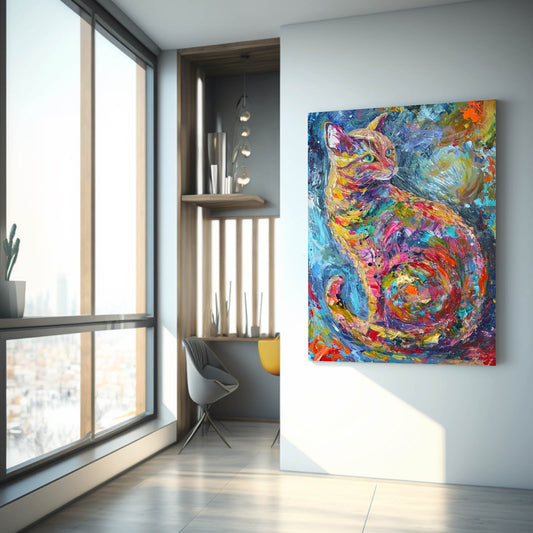
Impressionism Art Collection
Our Impressionism Art collection celebrates one of the most influential chapters in art history, bringing together luminous scenes, expressive brushwork, and timeless imagery inspired by the masters of Impressionism. Created for those who love elegant interiors and meaningful visual culture, this collection draws from the revolutionary ideas of the nineteenth century, when a diverse group of artists challenged academic painting, questioned the art establishment, and changed the direction of modern art forever. Today, these works continue to captivate viewers with their sensitivity to light, atmosphere, and the beauty of everyday life.
At the heart of this collection are images inspired by the painters who transformed the visual language of painting. Claude Monet, Edgar Degas, Berthe Morisot, Mary Cassatt, Alfred Sisley, Gustave Caillebotte, and Auguste Renoir all helped shape the movement through distinct techniques, fresh subject matter, and a shared desire to depict the world in a more immediate way. Their impressionist paintings often focused on modern life, leisure, city streets, rivers, gardens, landscapes, and fleeting social scenes, capturing the world as it felt in a passing moment rather than as a rigidly polished studio ideal.
Impressionism and the New Painting of Modern Life
The story of Impressionism begins in Paris, where a number of ambitious painters rejected the expectations of the official Salon and its conservative salon jury. Rather than submit only highly finished history paintings or mythological works, these artists turned toward a new painting centered on visible experience, personal vision, and the changing rhythms of modern life. Their subject matter included boulevards, rivers, gardens, theaters, cafés, dancers, boating parties, the countryside, and intimate moments of everyday life. In place of smooth finish, they preferred visible brushwork, fresh colour, broken tones, and the depiction of momentary and transient effects.
This movement did not appear all at once, but gradually developed through friendship, experimentation, and shared frustration with the traditional system. The impressionists found freedom in independent exhibitions, especially after the rejection they often faced from official institutions. In 1874, members of the Anonymous Society organized one of the most famous exhibitions in Paris, where Monet’s Impression, Sunrise helped inspire the term impressionist. A critic wrote the word as an insult, but the name remained. What began as mockery became the label for a new style that would reshape the future of modern art.
Claude Monet, Edgar Degas, Berthe Morisot, and the Artists Who Defined the Movement
No discussion of Impressionism feels complete without Claude Monet, whose name is now nearly synonymous with the entire movement. Monet dedicated much of his work to studying light, water, gardens, and changing weather. He was not the only artist involved, but he became its most recognized figure because his paintings so clearly showed the Impressionist interest in atmosphere, sunlight, and fleeting appearances. Monet painted rivers, haystacks, gardens, and cathedrals at different times of day, using oil on canvas to capture changing effects with extraordinary sensitivity. His famous Impression, Sunrise gave the movement its title, and many people still begin their journey into art history through Monet.
Yet the group was far more than Monet alone. Edgar Degas brought a different sensibility, turning his attention to rehearsal rooms, racecourses, laundresses, and the dancer as a distinctly modern subject. Degas often preferred indoor scenes, unusual cropping, and the study of bodies in motion, sometimes moving between painting, pastel, and even sculpture. Berthe Morisot brought a fresh and sensitive depiction of domestic life, women, gardens, and the changing experience of urban and private spaces. Morisot participated in many of the Impressionist exhibitions, and Morisot remains one of the most essential voices in the movement. Mary Cassatt added another crucial perspective, especially through her depictions of women and children. Alfred Sisley focused on landscapes, water, and seasonal atmosphere, while Gustave Caillebotte gave us striking views of boulevards, bridges, and Parisian society. Auguste Renoir, or Renoir, explored leisure, gatherings, and luminous figures with a sensuous command of colour and surface.
Together, these artists formed a remarkable and evolving group. They were not identical in method, but their participation in the same exhibitions, conversations, and experiments helped define the broader movement. Their differences are part of what made Impressionism so rich. Some preferred urban subjects, some the countryside, some indoor life, some open-air practice. But all shared an interest in a more immediate and vivid relation to sight.
Open Air Painting, Light, Colour, and Transient Effects
One of the most important developments in Impressionism was the use of open air painting. Although artists had long made outdoor sketches, the Impressionists made open air practice central to the development of finished works. Portable paint tubes, lighter easels, and new technology made it easier for painters to leave the studio and work directly before nature. This shift mattered because it encouraged them to study light, weather, and atmosphere as they actually appeared.
The Impressionist approach emphasized momentary and transient effects, especially the way sunlight transforms surfaces, colors, and shadows. Rather than producing a highly polished finished painting with sharply blended forms, many Impressionists used broken strokes, visible marks, and vibrant or broken tones to register the sensation of a passing instant. Their paintings often shows water shimmering, trees moving, figures waiting, smoke rising, clouds changing, and reflections flickering. The result was a way of painting that felt alive, unfinished in the best sense, and deeply responsive to vision itself.
This concern with perception changed both style and techniques. Strong outlines often softened. Shadows could contain blues, violets, or greens instead of simply black. Bright colors and fresh colour contrasts replaced darker academic palettes. Painters experimented with the mixing of tones on the eye rather than fully on the palette. Forms were simplified, and detail was often suggested rather than exhaustively described. The emphasis shifted from perfect finish to atmospheric truth. In many cases, a quick sketch or study informed a more complete painting, but the energy of the first impression remained central.
Subject Matter, Modernity, and Everyday Life
The Impressionists are often remembered for flowers and landscapes, but their true revolution lies in subject matter. They believed the ordinary world of modern life deserved serious artistic attention. Instead of idealized heroes or grand allegories, they painted train stations, gardens, rivers, ballet rehearsal rooms, suburban boating, women with children, cafés, city streets, and scenes of leisure. The rise of industrialization, urban growth, and changing class experiences created a new world to be seen, and the Impressionists turned their eyes toward it.
This focus on modernity made the movement especially significant in art history. It brought the visual experience of the present into painting with unprecedented emphasis. People in parks, women sewing, children playing with a hoop, men in boats, a girl by a balcony, promenades, cafés, and train platforms all became worthy of serious depiction. A depiction of a single afternoon could carry as much importance as a historical drama. This was a radical shift, and it explains why the movement occupies such a central place in the transition from older painting traditions to modern art.
At the same time, the Impressionists did not abandon beauty. Their works often celebrate sunlight, leisure, and social contact, but they also retain subtle complexity. Some scenes suggest class, gender, labor, and the experience of being seen. Degas’s ballet dancers, Cassatt’s women, Caillebotte’s city views, and Morisot’s domestic scenes each offer a different way of understanding the world around them. Through these artworks, the everyday became worthy of contemplation.
Exhibitions, Critics, and the Making of an Art Movement
The development of Impressionism depended not only on painting itself but on public presentation. The Impressionist group held a number of independent exhibitions, creating alternatives to the official Salon. These exhibitions were crucial because they gave artists the chance to exhibited works that the salon jury might reject. They also helped shape the public identity of the movement. Each exhibition added new voices, new debates, and new responses from critics.
Not everyone approved. Many critics mocked the loose execution, visible brushwork, and apparent informality. The term impressionist itself began as criticism, tied to Monet’s Impression, Sunrise. Yet over time, the movement gained support and serious attention. What seemed careless to one audience appeared fresh and truthful to another. The art establishment slowly began to shift. Today, institutions such as the National Gallery, the Metropolitan Museum, the Art Institute in Chicago, Tate in London, and major museums in Boston, New York, and Paris all present Impressionist works as central to the history of painting.
The movement’s timeline is now well documented across museum resources, including the Heilbrunn Timeline, academic publications, and museum essays. Scholars, curators, and publishers such as Yale University Press continue to study the movement’s history, techniques, and social context. The continued presence of Impressionist works in the National Gallery, the Metropolitan Museum, and other leading institutions shows how a once-contested style became one of the most beloved forms of painting in the world.
From Impressionism to Post Impressionism and Modern Art
Although this collection focuses on Impressionism, it also speaks to what came after. Without Impressionism, there would be no Post Impressionism in the form we know it, and much of modern art would look very different. The movement’s independence, experimentation, and focus on the visual moment opened doors for later generations. It influenced painters interested in structure, emotion, symbolism, and abstraction, even when they moved away from Impressionist methods.
In that sense, Impressionism is both a destination and a beginning. It stands on its own as a complete and beautiful chapter in art history, but it also marks the birth of many later developments. It changed how artists thought about representation, how they related to the public, and how they used paint itself. It encouraged independence from official institutions, and it showed that a movement could define itself outside the academy. That independence remains one of its lasting contributions.
Why Impressionism Art Still Belongs in the Modern Interior
Today, Impressionism continues to resonate because it combines atmosphere, emotion, and visual sophistication. These impressionist paintings were rooted in a specific moment in France, yet they still feel alive in contemporary spaces. Their sensitivity to light, landscape, gardens, figures, and passing time makes them especially suitable for rooms meant to feel calm, elegant, and reflective. A Monet-inspired river scene, a Degas rehearsal composition, or a Morisot garden image can bring softness, vivid beauty, and historical richness into everyday life.
Our collection is designed for people who want more than decoration. It is for those who want artworks that carry a story, a legacy, and a connection to the great painters of the nineteenth century. Whether you are drawn to Claude Monet, Edgar Degas, Berthe Morisot, Mary Cassatt, Alfred Sisley, Gustave Caillebotte, or Auguste Renoir, this collection offers a way to explore a defining movement in painting through elegant pieces suited to the home.
These works can complement many interiors because Impressionism balances softness with visual energy. The shifting light, bright passages, broken brushwork, and delicate handling of colour help a room feel more open and alive. They invite attention without becoming heavy. They are ideal for those who want to use classical influence in a fresh, livable way.
Explore the Impressionism Art Collection
Our Impressionism Art collection brings together imagery inspired by the painters who changed the course of art history. From river views and gardens to urban scenes and luminous studies of everyday life, these works celebrate the beauty of Impressionism, the courage of the artists who challenged tradition, and the enduring influence of their vision.
Explore the collection and discover pieces inspired by impressionist paintings, modern life, and the radical energy of a movement that once stood outside the art establishment. Whether you are building a refined interior, deepening your interest in the history of painting, or simply searching for timeless beauty, this page offers a graceful way to bring the spirit of Impressionism into your home.



 -28%
-28%
 -28%
-28%
 -28%
-28%
 -28%
-28%
 -28%
-28%
 -28%
-28%
 -28%
-28%
 -28%
-28%
 -28%
-28%
 -28%
-28%
 -28%
-28%
 -28%
-28%